The starting point was the shoreline. Not the drama of waves, but the quieter forms they leave behind—the soft curve of a dune, the ripple pattern in wet sand, the line where sea meets shore and keeps shifting. The idea had a name from the start: The Flow of Sand and Sea.
Working drawing: perfect circles, offset until they begin to flow.
DUNNE translates those forms into outdoor furniture. The curves come from layering perfect circles, a geometry that feels both precise and natural. Metal components carry horizontal grooves that recall the texture of wicker without imitating it. Seat and backrest flow together without interruption.
The extruded profiles. Tongue and groove, almost nothing wasted.
Joined by hand: a mallet, a tap, and the profiles become one surface. Photo: Gandia Blasco
Detail—Salone del Mobile, Gandia Blasco booth 2025.
The aluminum is 100% recyclable, cut with almost zero waste. Gandia Blasco’s hand-cut tongue and groove technique holds it all together. Durability was always part of the intention — something that lasts doesn’t need to be replaced.
Horizontal grooves: the memory of wicker, in metal—Salone del Mobile, Gandia Blasco booth 2025.
Layered circles—the geometry beneath every curve.
Seat, table, backrest: one curve, no interruption—Salone del Mobile, Gandia Blasco booth 2025.
Salone del Mobile, Gandia Blasco booth 2025.
In place: low and long, holding the line of the architecture.









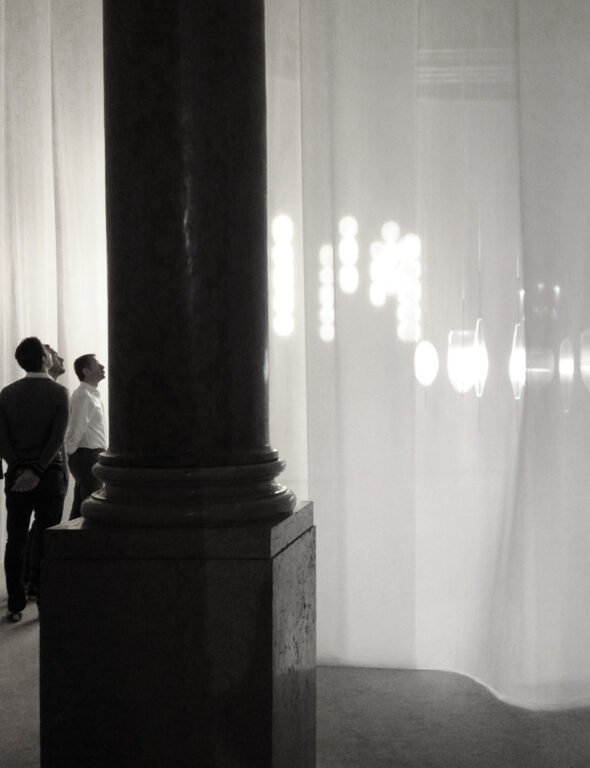

![FLOW[T], WonderGlass. Design by Nao Tamura.](https://naotamura.com/img/2015/04/NaoTamura_IN_Flowt04-576x768.jpg "FLOW[T], WonderGlass. Design by Nao Tamura.")


