THE TOKYO TOILET


How can a space we all share be safe for everyone who walks in?
As a woman, I don’t think I’m the only one who feels a flicker of fear entering a public toilet outdoors, especially at night, alone, when anyone could walk in. Living in New York, I had also watched friends in the LGBTQ+ community navigate the same door with the same question. I realized that safety and privacy were not an extra; they were the whole point.
So I made three separate rooms instead of one shared one. Inclusion, I concluded, is measured not by how much we share, but by whether everyone can enter without fear.
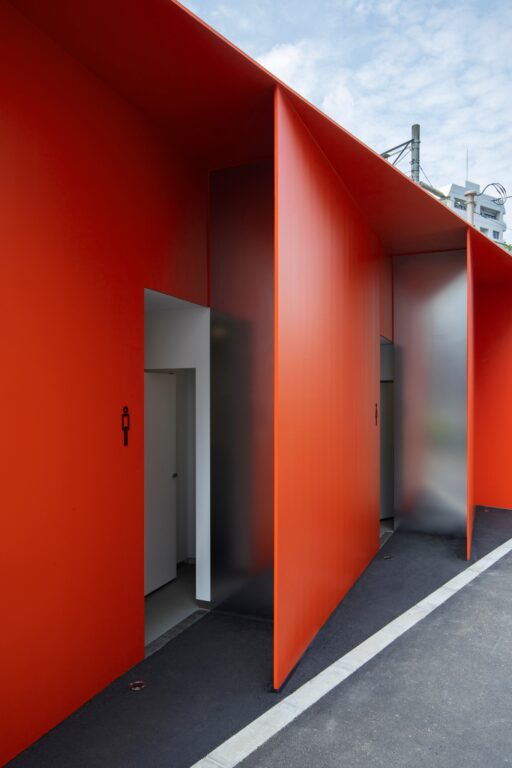
The site is a small triangular lot under the elevated tracks in Shibuya, industrial and concrete. I didn’t want the building to blend in. Red, for me, is safety and immediacy: easy to find, easy to read, and not a place to linger.
The folds come from origata, the Japanese way of wrapping a gift in a single sheet of paper, folded precisely so that the object inside stays untouched. The toilets were conceived as a gift to the city’s visitors, so I wrapped the three rooms the same way, in folded steel.
Opened in August 2020, the Higashi-sanchome toilet has been in public service since. In 2024, with all seventeen toilets complete, the project was handed to Shibuya City as permanent infrastructure. It has traveled to Triennale Milano and Clerkenwell Design Week, and appears in Wim Wenders’s PERFECT DAYS.









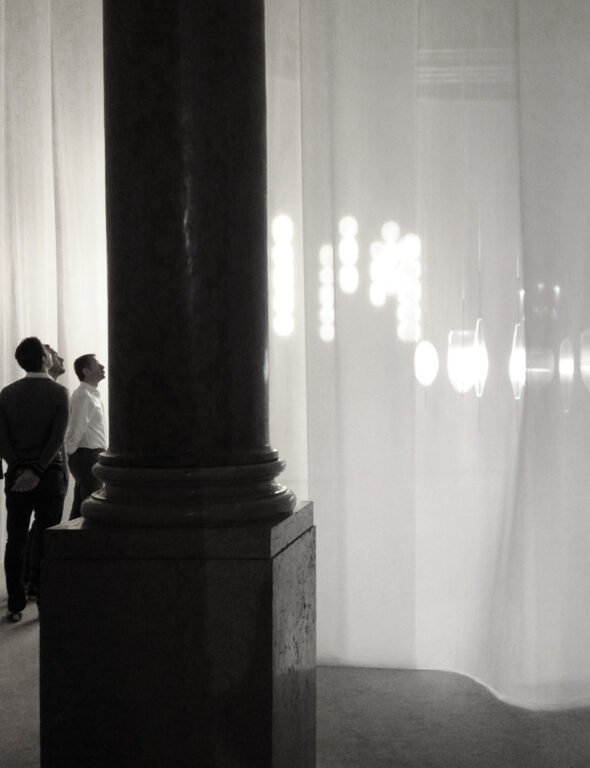

![FLOW[T], WonderGlass. Design by Nao Tamura.](https://naotamura.com/img/2015/04/NaoTamura_IN_Flowt04-576x768.jpg "FLOW[T], WonderGlass. Design by Nao Tamura.")


